Official-Affiliate
Official-Affiliate

Chi Siamo
About Us

Sponsor Principali
Main Sponsors


r/Black_Angel_Team

TikTok
TikTok
- Assetto Corsa EVO — Update 0.9 Disponibile: Nuove Vetture, Classifiche Online e Aggiornamento del Modello Fisico – Assetto Corsa EVO — Update 0.9 Disponibile: Nuove Vetture, Classifiche Online e Aggiornamento del Modello Fisico L'Update 0.9 di Assetto Corsa EVO è o...
- Automobilista 2 V1.6.9.91 è Ora Disponibile — Ulteriori Correzioni e Miglioramenti – Automobilista 2 V1.6.9.91 è Ora Disponibile — Ulteriori Correzioni e Miglioramenti Reiza Studios ha rilasciato il piccolo aggiornamento V1.6.9.91 per Auto...
- Project Motor Racing — PMR Test Centre: Un Circuito di Prova Gratuito per Tutta la Community – Project Motor Racing — PMR Test Centre: Un Circuito di Prova Gratuito per Tutta la Community Il team di Project Motor Racing ha rilasciato gratuitamente tramite ...
Notizie
News
06
Gennaio
2025

Tecniche di Frenata: Una Guida Completa (e il Ruolo Cruciale del Trail Braking)

Tecniche di Frenata: Una Guida Completa (e il Ruolo Cruciale del Trail Braking)
La frenata è uno degli aspetti più fondamentali e spesso sottovalutati della guida, sia che si tratti di un’auto di tutti i giorni sia di un bolide da corsa. Una frenata efficace non solo permette di rallentare in sicurezza, ma è anche un elemento chiave per ottimizzare i tempi sul giro in pista e per mantenere un controllo preciso del veicolo in ogni situazione. In questo articolo, esploreremo le diverse tecniche di frenata, concentrandoci in particolare sul trail braking, una tecnica avanzata che, se padroneggiata, può fare la differenza in termini di performance e controllo. Ci baseremo sull’analisi dell’articolo di "Box This Lap" (https://boxthislap.org/iracing-should-you-trail-brake-in-every-corner/) per chiarire come e quando il trail braking debba essere utilizzato.
Le Basi della Frenata: Oltre la Semplice Decelerazione
Prima di addentrarci nel trail braking, è fondamentale comprendere le basi della frenata. In sostanza, la frenata è il processo di conversione dell'energia cinetica (energia del movimento) in energia termica (calore) attraverso l'attrito generato dai freni. I componenti fondamentali del sistema frenante sono i dischi o tamburi, le pastiglie o ganasce e, naturalmente, il pedale del freno che aziona l'intero sistema.
Esistono due approcci base:
- Frenata In Linea Retta: Questa è la forma più semplice e istintiva di frenata. Si applica pressione sul pedale del freno quando l'auto è in linea retta, garantendo una decelerazione efficiente e stabile. Questa tecnica è ideale per situazioni di emergenza o per rallentare prima di una curva a bassa velocità.
- Frenata e Sterzata Separate: Questa tecnica prevede di completare la frenata prima di iniziare la sterzata. L'auto decelera in linea retta, poi si rilascia completamente il freno e si inizia a curvare. È una tecnica comune per i piloti alle prime armi e per le situazioni in cui non è necessario spingere al limite.
Il Trail Braking: L’Arte di Fondere Frenata e Sterzata
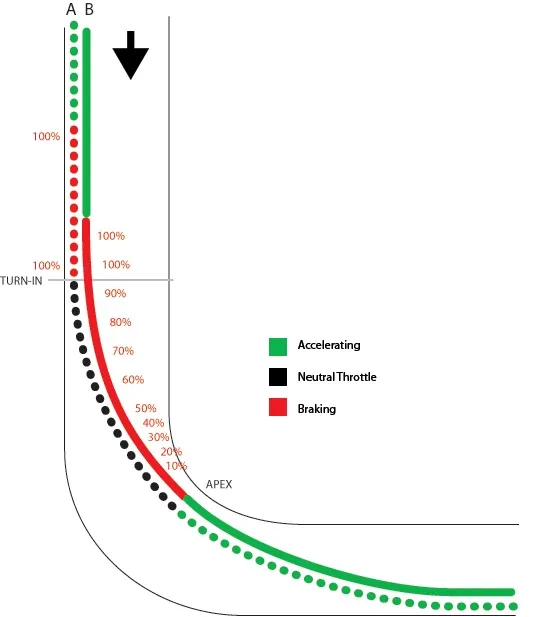
Il trail braking è una tecnica di frenata avanzata che prevede l'applicazione parziale del freno mentre si sterza in curva. L'obiettivo è quello di mantenere un carico leggero sull'asse anteriore (che supporta anche le ruote sterzanti) durante la fase iniziale dell'ingresso in curva, migliorando l'aderenza e, di conseguenza, la capacità di sterzata.
Come funziona il trail braking?
- Frenata Forte all'Inizio: Similmente alla frenata in linea retta, si inizia con una frenata decisa per rallentare l'auto prima dell'ingresso in curva.
- Rilascio Progressivo del Freno: Invece di rilasciare completamente il pedale del freno una volta raggiunta la velocità desiderata, si diminuisce gradualmente la pressione esercitata, mantenendo una leggera frenata mentre si inizia a sterzare.
- Transizione verso l'Acceleratore: La pressione sul freno viene ulteriormente diminuita man mano che si percorre la curva, fino al completo rilascio e alla transizione verso l'acceleratore in uscita dalla curva.
I Benefici del Trail Braking
- Maggiore Aderenza: Il carico aggiuntivo sull'asse anteriore dato dalla frenata parziale aumenta l'aderenza degli pneumatici anteriori, migliorando la direzionalità e la precisione della sterzata.
- Maggiore Controllo: Il trail braking permette di gestire meglio il trasferimento di carichi tra asse anteriore e posteriore, controllando il rollio e il beccheggio dell'auto e aiutandoci a mantenere un controllo più stabile e preciso, specialmente in situazioni di sottosterzo.
- Tempi sul Giro Migliori: La capacità di sfruttare al massimo l'aderenza disponibile e di ottimizzare l'ingresso in curva si traduce in una maggiore velocità in ogni fase della curva.
- Maggiore Flessibilità: Il trail braking permette di adattare la traiettoria con più agilità durante l'ingresso in curva, utile soprattutto in situazioni impreviste o durante le competizioni.
Quando Usare (e Quando Non Usare) il Trail Braking
La tecnica del trail braking è potente, ma non è adatta a tutte le situazioni. Ecco alcune linee guida:
- Ideale per Curve a Media e Alta Velocità: Il trail braking brilla nelle curve dove è necessario massimizzare l'aderenza e la velocità di percorrenza.
- Efficace in Caso di Sottosterzo: La frenata parziale durante la sterzata può aiutare a controbilanciare il sottosterzo (quando l'auto tende ad allargare la traiettoria).
- Non Necessario in Curve a Bassa Velocità: Nelle curve a bassa velocità, dove l'aderenza non è un problema critico, la frenata e la sterzata separate sono spesso più che sufficienti.
- Attenzione su Fondi Scivolosi: Il trail braking richiede una buona aderenza. Su fondo bagnato o con bassa aderenza, è meglio frenare completamene prima di sterzare per evitare bloccaggi delle ruote o perdite di controllo.
- Apprendimento Progressivo: Il trail braking richiede molta pratica. È fondamentale iniziare con calma, concentrandosi sulla sensibilità del pedale del freno e sulla risposta del veicolo.
L’Importanza della Sensibilità e della Pratica
La padronanza della tecnica del trail braking richiede una grande sensibilità al pedale del freno e una profonda comprensione della dinamica del veicolo. È un processo che va appreso gradualmente attraverso la pratica e l'esperienza. Non esiste una "ricetta" unica, ma con il tempo e la pratica, si imparerà a gestire il pedale del freno in modo istintivo, sfruttando al massimo le potenzialità di questa tecnica.
Il Punto di Vista dell'Articolo di "Box This Lap"
L'articolo di "Box This Lap" (https://boxthislap.org/iracing-should-you-trail-brake-in-every-corner/) sottolinea proprio l'importanza di capire quando e come utilizzare il trail braking. Non si tratta di una tecnica da applicare in ogni singola curva, ma di un'abilità da impiegare in modo mirato a seconda delle caratteristiche del circuito e della macchina. L'articolo evidenzia come il trail braking, se mal eseguito, possa portare più danni che benefici. L'enfasi è sulla padronanza della tecnica, che si raggiunge solo con la pratica e una profonda comprensione di come la macchina risponde ai comandi.
Conclusione
La frenata è un aspetto cruciale della guida, sia in condizioni normali che in pista. Il trail braking è una tecnica avanzata che, se utilizzata correttamente, può migliorare significativamente le prestazioni e il controllo del veicolo, specialmente in curva. Tuttavia, è fondamentale capire che non è una tecnica “universale” e che va usata in modo selettivo e con sensibilità. L’apprendimento del trail braking richiede tempo, pratica e una profonda comprensione di come la macchina e i suoi pneumatici si comportano alle diverse sollecitazioni. Ricorda: la perfezione nella frenata, come in ogni altra abilità di guida, si raggiunge attraverso la pratica e la riflessione critica.
boxthislap.org
Ascolta l'Articolo
Devi essere registrato per scrivere commenti!
• Registrati
• Per iscriversi